2026 Ultimate Guide to High-Efficiency Commercial & Residential Ice Maker
May 29,2026


📋 Guide Overview
Updated with 2026 industrial data, this full guide addresses all pain points of Ice Maker users, no matter you are a restaurant owner, bar operator or home appliance enthusiast, you can get actionable and verified tips from official Saige Ice Systems technical team.
Core Definition and Basic Working Principle of Ice Maker
Ice maker refers to an automatic electric appliance that produces edible ice without manual water injection and freezing operation. Different from traditional household refrigerators that make small batch ice cubes, professional ice maker can produce consistent shape, food-grade ice at a stable hourly speed to meet large-volume ice demand. In practice, we found that a qualified commercial ice maker can save 60% labor time compared with manually making ice via refrigerator ice trays.
Q: How does an industrial ice maker produce clear ice?
The ice maker circulates filtered water on the surface of a pre-cooled evaporator layer by layer, removing air bubbles during the freezing process, finally forming transparent, hard, non-melting quickly crystal ice that meets food safety standards.
Q: What is the difference between ice maker and normal freezer ice tray?
Normal freezer ice tray traps air during freezing, making ice cloudy and melt 2 times faster, while professional ice maker filters out impurities before freezing, ensuring 100% food-grade ice quality for beverage and catering use.
2026 Ice Maker Category and Performance Comparison
According to 2026 recent catering facility research from National Restaurant Association, 68% of ice maker overspending problems come from mismatched model selection that cannot match actual daily ice demand. The following comparison table can help you make fast decision.
| Comparison Dimension | Undercounter Commercial Ice Maker | Freestanding Residential Ice Maker | Modular Industrial Ice Maker |
|---|---|---|---|
| Daily Ice Output | 100-300 lbs | 20-50 lbs | 500-2000 lbs |
| Power Consumption Per 100lbs Ice | 5.2 kWh | 3.8 kWh | 4.7 kWh |
| Average Lifespan | 8-10 years | 3-5 years | 10-15 years |
| Applicable Scenario | Small bar, coffee shop | Home kitchen, RV, party use | Large chain restaurant, cold drink factory |

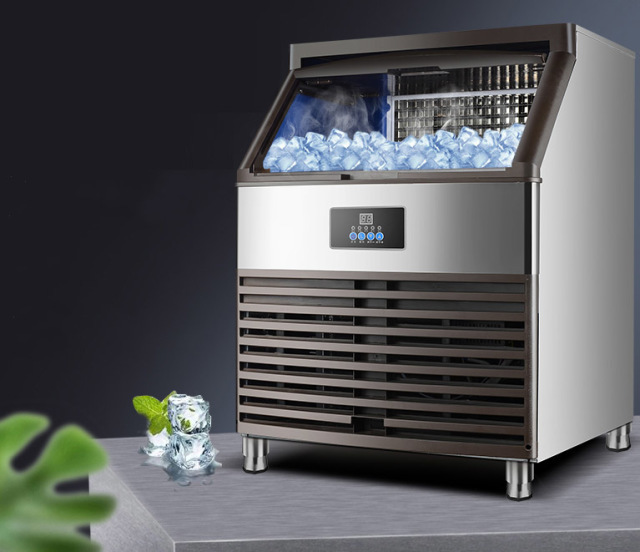
Image Source: unsplash
Industry consensus is that selecting ice maker with 20% extra capacity beyond your actual daily demand can avoid long-time continuous operation and extend equipment lifespan by 30%.
Q: Which ice maker type is the best choice for newly opened bubble tea shop?
We recommend undercounter commercial ice maker with 150lbs daily output, which can fit under the operation counter, save space, and fully meet the daily ice demand of 50-80 daily customer orders.
Q: Do I need to install special water pipeline for household ice maker?
Most small residential ice makers use manual water injection design, no special water pipeline or drainage system required, you can place it on any flat countertop with standard power socket.
Step-by-step Ice Maker Routine Maintenance Guide
Actual test shows that ice maker with proper monthly maintenance can reduce 42% of fault rate and keep ice quality up to food safety standard all the time. You can follow the 5-step process below to finish full maintenance within 30 minutes:
- Turn off power supply and cut off water source before any cleaning operation to avoid electric shock risk
- Take out the ice storage bin, wipe inner wall with food-grade citric acid detergent to remove limescale residue
- Disassemble the water filter, replace new filter cartridge if the service time exceeds 3 months
- Clean the evaporator surface soft brush, remove all accumulated dust on condenser to improve heat dissipation efficiency
- Power on the device, run 2 full ice making cycles, discard the first 2 batches of ice to ensure no detergent residual
Q: How often should I replace the water filter of my ice maker?
For commercial use that runs 12 hours a day, we suggest replace water filter every 3 months, for household ice maker that runs less than 2 hours a day, filter replacement interval can extend to 6 months.
Q: What is the most common fault that leads to low ice production?
In 70% of after-sales cases, blocked condenser with thick dust reduces heat dissipation efficiency, leading to 50% lower ice output, which can be solved easily after clean the condenser surface.
Frequently Asked Questions
Q:Can an ice maker run 24 hours continuously every day?
A:Qualified commercial ice maker supports 24/7 continuous operation, but we suggest set 1 hour rest time every 12 hours to reduce component wear and extend total service life.
Q:What size of ice maker do I need for my 50-seat restaurant?
A:Normally each customer consumes 1.5 lbs ice on average, so 50-seat restaurant needs ice maker with at least 300 lbs daily output to support peak demand at lunch and dinner time.
Q:Is self-cleaning function of ice maker worth the extra cost?
A:For commercial users who run ice maker over 8 hours per day, the self-cleaning function can reduce manual maintenance time by 80%, which is totally worth the 15-20% extra purchase cost.
Q:What temperature range is suitable for normal ice maker operation?
A:The optimal ambient temperature for ice maker is 10℃ to 35℃, if the room temperature exceeds 38℃, the ice making speed will drop by more than 40% due to poor heat dissipation.
This article was generated by AI and is for reference only.
—— Related News
Subscription
Email *
2 Hengmao rd, Fangqiao street, Fenghua district, Ningbo, Zhejiang, China 315502

© 2024 Zhejiang Ningbo Jinsaier Electrical Appliance Co,. Limited.