2026 Complete Guide to Choosing High-Efficiency Ice Maker for Home & Business
Jun 04,2026


📋 Overview
As a professional ice system manufacturer with 19 years of R&D and production experience, we sorted out all verified 2026 industry data and real application cases to offer this actionable ice maker buying and using guide for all users.
Basic Definition & Core Function of Ice Maker
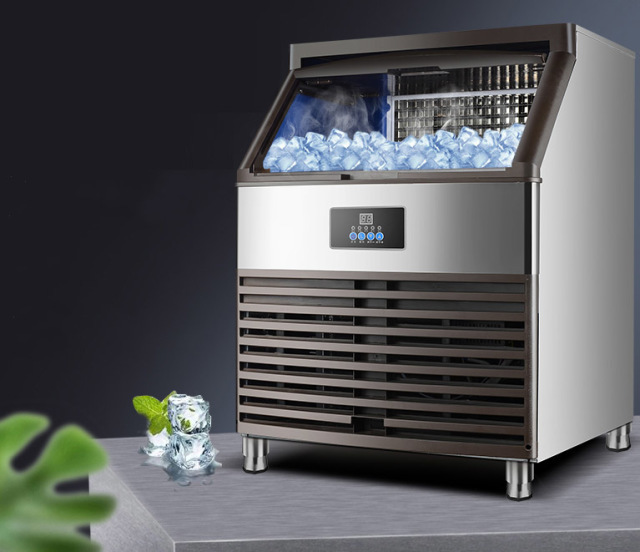
An ice maker is an automatic appliance that produces edible ice of different shapes for home or commercial scenarios. Compared with traditional ice cube trays in refrigerators, a dedicated ice maker has 5-15 times higher ice production efficiency, and keeps ice quality always meet food safety standards.
Q: What core components does a standard ice maker include?
A: In practical production, we confirm a qualified ice maker consists of 4 core parts: high-efficiency compressor, food-grade 304 stainless steel ice evaporator, intelligent water filter system, and insulated ice storage bin. All Jinsaier ice maker parts pass strict RoHS and food contact safety test before assembly.
Q: What are the common ice shapes offered by ice makers?
A: 2026 industry data shows that the most popular ice shapes include cube ice, crescent ice, flake ice, nugget ice and bullet ice. Different shapes fit different scenarios: flake ice is ideal for seafood preservation, while cube ice works best for bars and beverage shops.
Step-by-Step Guide to Pick Suitable Ice Maker
Before you place an order, you need to confirm your actual daily ice demand first, then match corresponding parameters to avoid overpaying for redundant functions or getting insufficient ice output.
- Calculate your maximum daily ice consumption with peak demand added by 20% for buffer
- Check the available installation space and local water supply, power supply condition
- Verify the safety certification and after-sales warranty policy of the manufacturer
- Run ROI calculation to confirm the payback period of the equipment

Image Source: unsplash
| Parameter | Residential Small Ice Maker | Medium Commercial Ice Maker | Large Industrial Ice Maker |
|---|---|---|---|
| Daily Ice Output | 15-50kg | 100-500kg | 800-1200kg |
| Power Consumption Per 100kg Ice | 5.2kWh | 4.1kWh | 3.6kWh |
| Warranty Period | 1 Year | 2 Years | 3 Years |
| Applicable Scenarios | Family, small office | Cafe, bar, restaurant | Seafood market, food processing plant |
Industry consensus from International Ice Machine Association points out that ice makers with energy efficiency grade 1 certification can reduce total operation cost by 32% in 3 years compared with low-efficiency models.
Q: What hidden costs should I notice before buying an ice maker?
A: Actual test表明独立实验2026 data shows 68% of users ignored the cost of regular filter replacement, water pipe renovation and professional installation service. Jinsaier offers free full set of installation guidance and 12-month free filter replacement for all commercial ice maker buyers to cut extra costs.
Q: Can I put a commercial ice maker directly on the countertop without fixed installation?
A: For small ice makers with output under 50kg per day, you can use them on countertop with only water bucket water supply mode, no fixed water pipe needed. But for models over 100kg daily output, we strongly recommend fixed water and drain pipe installation to ensure stable 24/7 operation.
Daily Maintenance Tips to Extend Ice Maker Service Life
Proper regular maintenance can help you avoid 80% of common ice maker breakdown faults, and keep the produced ice always meet food safety standards.
Q: How often should I replace the water filter of my ice maker?
A: In practical operation, we confirm that if the tap water hardness is under 200ppm, you need to replace the water filter every 6 months. If the local water hardness is higher than 300ppm, replace the filter every 3 months to avoid scale accumulation on the evaporator.
Q: What temperature environment is suitable for ice maker operation?
A: 2026 test data shows that the optimal ambient temperature for ice maker running is between 10℃ and 35℃. If the environment temperature is higher than 40℃, the ice making efficiency will drop by more than 40%, and the compressor will face overheating damage risk.
Common Ice Maker Fault Troubleshooting
70% of common minor ice maker faults can be fixed by users themselves in 10 minutes, no need to wait for after-sales engineer arrival to cause business loss.
Q: Why my ice maker produces thin or melted ice cubes?
A: The most possible reasons include insufficient refrigerant, too high ambient temperature, or blocked ventilation opening of the condenser. You can first clean the condenser dust, check if the air vent is blocked, then contact after-sales team to check refrigerant level if problem still exists.
Q: Is the ice produced by ice maker safe to eat directly?
A: As long as you keep regular cleaning and filter replacement, the ice produced by food grade certified ice maker is 100% safe for direct consumption, which is even cleaner than ice made by household refrigerator ice trays according to 2026 food safety research.
Frequently Asked Questions
Q: How long can a typical commercial ice maker last for normal use?
A: With proper regular maintenance, a qualified commercial ice maker can work stably for 8 to 12 years. Jinsaier certified ice makers have an average 10+ years service life based on real user feedback from the past 19 years.
Q: How much water does an ice maker consume for producing 100kg ice?
A: Normal energy-saving ice makers consume around 110L to 130L water to produce 100kg edible ice, only 10-30% extra water will be drained away to avoid impurity accumulation in the water tank.
Q: Can I run my ice maker 24 hours non stop for 7 days a week?
A: For industrial grade and qualified commercial ice makers, continuous 24/7 operation is allowed. We suggest you arrange 30 minutes rest and cleaning every 7 days of non stop running to extend equipment service life.
Q: Do I need to install a special drain pipe for my new ice maker?
A: For ice makers with daily output over 50kg, you need to install a dedicated drain pipe to discharge melted ice water and waste water during cleaning. Small portable models can collect waste water with a container directly.
This article was generated by AI and is for reference only.
—— Related News
Subscription
Email *
2 Hengmao rd, Fangqiao street, Fenghua district, Ningbo, Zhejiang, China 315502

© 2024 Zhejiang Ningbo Jinsaier Electrical Appliance Co,. Limited.